
Chennai, April 2026: The story of Samsung India is often associated with market share, smartphone launches, and its massive Noida factory—one of the world’s largest mobile manufacturing facilities. While impressive, this is only part of a much larger narrative. The more consequential story lies in Samsung’s growing contribution to India’s human capital and innovation ecosystem.
This transformation is unfolding in classrooms across Uttar Pradesh and Tamil Nadu, coding labs in Maharashtra, and incubation centres at Indian Institute of Technology Delhi. Samsung has shifted its focus from devices to developing an ecosystem where Digital India can thrive. As of April 2026, its flagship Samsung Innovation Campus (SIC) programme has already trained and certified 5,000 youth in Tamil Nadu alone.
“As we complete three decades in India, we see innovation and education as both an enabler of progress and a catalyst for inclusion. The focus going forward is on how this potential is translated into meaningful impact at scale. At Samsung, we are committed to nurturing a generation of young innovators with the skills, creativity, and collaborative mindset which enables them to grow and address complex societal challenges and contribute to a more inclusive future,” said SP Chun, Corporate Vice President, Samsung Southwest Asia.
Samsung’s citizenship programmes have impacted 1.5 million people, with CSR spending rising from ₹144.48 crore in FY2024–25 to ₹193.89 crore in 2025–26. Over three years, the company has built a robust youth-skilling ecosystem that supports learners from classroom to career.
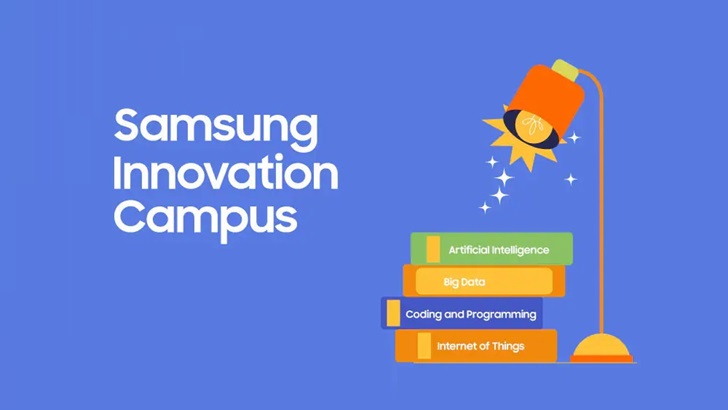
At its core is SIC, backed by a ₹77.25 crore budget for 2025–26, offering training in AI, IoT, Big Data, and programming. Since 2022, it has trained 6,500 students, with 3,500 certified in 2024—a 17% increase year-on-year. In 2025, the programme scaled six-fold to 20,000 students across ten states, achieving 48% women participation nationwide and over 70% in Tamil Nadu. Expansion efforts included certifying 1,000 students in Maharashtra and enrolling 7,000 more in coding programmes, with 5,000 certifications in Uttar Pradesh—highlighting strong government partnerships.
SIC’s impact has been recognized with the CSR Initiative of the Year at the ESSCI National Skills Awards 2024 held at Bharat Mandapam.
Complementing SIC is “Solve for Tomorrow,” a ₹29.88 crore initiative in collaboration with FITT at IIT Delhi, MeitY, and the United Nations in India. The programme supports youth-led innovations addressing social, environmental, and health challenges, with over ₹90 lakh in project funding and ₹1 crore incubation grants for winners. The 2025 AI Summit recognized Paraspeak for its accessibility solution.
For non-tech career paths, the DOST Sales Programme trains underserved youth for retail roles. Together with initiatives like Nanum volunteering, Samsung’s efforts reflect a structural ambition, its most enduring contribution to India lies not in devices sold, but in capabilities built at a critical demographic moment.
#Samsung #SamsungInnovationCampus #TNYouth #TNYoungsters #SkillDevelopment #SkillTraining #SPChun #DigitalIndia #DostSalesProgramme #Nanum #SmartPhone #Sriperumpudur #Employees #Ecosystem #Award #CareerGrowth #SuccessStory #PressRelease #ChennaiPR #PRAgencyinChennai #PressConferenceOrganizer